
The promise sounds too good to be true: tell an AI what kind of website you need, wait a few minutes, and voilà—a fully functional, professional-looking website appears. AI-only website builders have captured the attention of entrepreneurs, small business owners, and anyone looking for a quick digital presence. The appeal is undeniable: speed, simplicity, and the elimination of technical barriers.
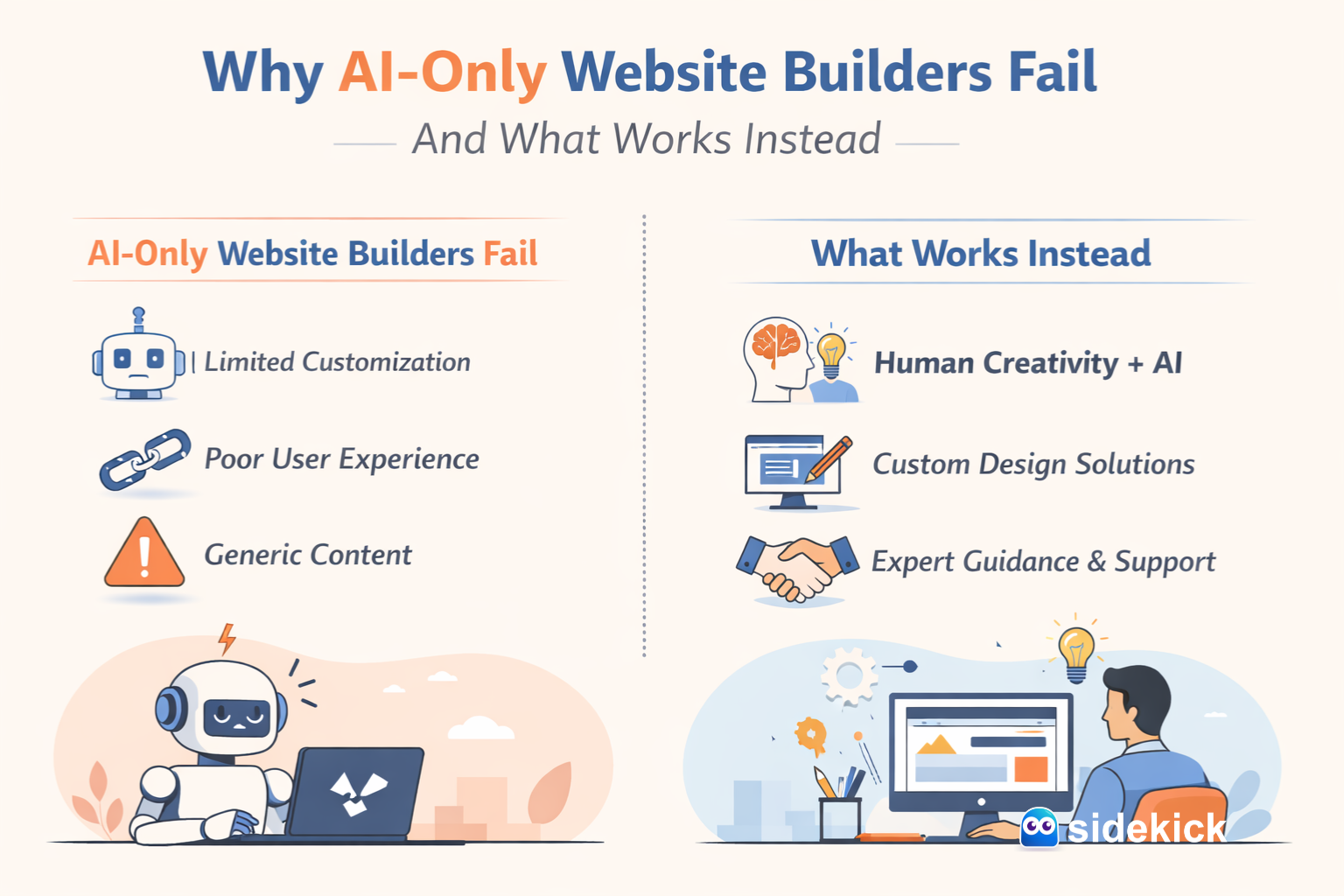
But here's the reality check that many users discover too late: AI-only solutions often create websites that look impressive at first glance but fail to deliver where it matters most. They struggle with originality, customization, search engine optimization, and user experience—the very elements that separate successful websites from digital mediocrity.
The real breakthrough isn't in choosing between human expertise and artificial intelligence. It's in understanding how these two forces can work together to create websites that are both efficient to build and effective in achieving your goals.
The Hidden Limitations of AI-Only Website Builders
Lack of Creativity and Originality
AI website builders excel at following patterns, but they struggle with genuine creativity. These systems generate websites by analyzing thousands of existing sites and reproducing common design elements and layouts. The result? A sea of websites that look remarkably similar to each other.
When every business in your industry uses the same AI builder, potential customers encounter nearly identical layouts, color schemes, and content structures. Your veterinary clinic's website might look almost identical to the one across town, making it nearly impossible to stand out in a crowded marketplace.
This template-driven approach also limits storytelling capabilities. AI can generate generic copy about your services, but it cannot capture the unique narrative that makes your business memorable. It doesn't understand why you started your company, what sets your approach apart, or how to communicate your brand personality in a way that resonates with your specific audience.
Limited Customization Options
AI website builders often market themselves as offering "endless possibilities," but users quickly discover the reality of working within rigid parameters. While you might be able to change colors or swap out images, fundamental structural changes remain off-limits.
Consider a restaurant owner who wants to integrate a custom reservation system that connects with their existing point-of-sale software. An AI-only builder might offer basic booking widgets, but it cannot create the seamless integration that would truly streamline operations. Similarly, an e-commerce business might need specific product filtering options or a unique checkout process that AI builders simply cannot accommodate.
This inflexibility becomes particularly problematic as businesses grow and evolve. What starts as a simple informational website might need to transform into a comprehensive platform with member portals, advanced search functionality, or integration with specialized industry software.
SEO Deficiencies
Search engine optimization requires both technical precision and strategic thinking—areas where AI-only builders frequently fall short. While these platforms might handle basic SEO elements like meta titles and descriptions, they often miss the nuanced optimization that drives real results.
AI builders typically generate generic content that lacks the depth and keyword strategy needed for competitive rankings. They might create a services page for a law firm, but they won't understand the importance of targeting specific practice areas with location-based keywords or creating content that addresses the unique questions potential clients are asking.
Technical SEO presents even bigger challenges. AI builders might not properly implement schema markup, optimize site speed for your specific content, or create the internal linking structure that search engines favor. These technical elements require understanding both search engine algorithms and your business goals—something current AI systems cannot fully grasp.
Poor User Experience Design
User experience goes far beyond making a website look attractive. It requires understanding human psychology, user behavior patterns, and the specific journey your visitors take from initial interest to conversion.
AI website builders often create sites with standard navigation structures that don't account for how your particular audience thinks about your services. A software company's website needs a different user flow than a wedding photographer's portfolio, but AI systems typically apply generic solutions to unique problems.
Loading speeds present another significant issue. AI-generated sites often include unnecessary code, oversized images, or inefficient plugins that slow down performance. Since page speed directly impacts both user satisfaction and search engine rankings, these technical shortcomings can seriously undermine your website's effectiveness.
The Power of Human-AI Collaboration
Creativity Meets Intelligence
The most effective approach combines human creativity with AI efficiency. Skilled designers and developers can use AI tools to accelerate routine tasks while focusing their expertise on strategic decisions that require human insight.
For example, a designer might use AI to quickly generate multiple layout options, then apply their understanding of brand psychology and user behavior to select and refine the best approach. This process maintains creative control while leveraging AI's ability to rapidly explore possibilities.
Human expertise also ensures that your website tells a compelling story. While AI can generate product descriptions and service explanations, human writers understand how to craft messaging that connects emotionally with your audience and differentiates your business from competitors.
Customization and Personalization
When human developers work alongside AI tools, they can create truly customized solutions that address specific business needs. They can build custom integrations, develop unique functionality, and ensure that every element of your website serves a strategic purpose.
This collaboration approach also enables sophisticated personalization. While AI can analyze user behavior patterns, human strategists can interpret that data and implement personalization strategies that genuinely improve user experience and conversion rates.
Optimized SEO Strategy
Human SEO specialists can leverage AI tools for keyword research and content optimization while applying strategic thinking that AI cannot replicate. They understand how to balance search engine requirements with user needs, creating content that ranks well while providing genuine value to visitors.
The combination also enables ongoing optimization. Human experts can analyze performance data, identify opportunities for improvement, and implement changes that adapt to evolving search engine algorithms and business goals.
Practical Examples and Use Cases
Consider the difference between AI-only and collaborative approaches across various industries:
E-commerce: While Wix and Squarespace offer AI-powered e-commerce features, they often lack the advanced inventory management, custom checkout processes, and integrated marketing automation that growing online retailers need. A collaborative approach might use AI for initial design concepts while human developers create custom functionality for complex product catalogs and seamless payment processing.
Professional Services: AI builders might create a generic lawyer or accountant website, but they cannot develop the specialized client portals, document management systems, or compliance features that professional service firms require. The collaborative approach ensures both professional appearance and functional efficiency.
Creative Portfolios: Platforms like Weebly offer simple portfolio templates, but photographers, designers, and artists need websites that showcase their work in unique ways that reflect their artistic vision. Human designers can create custom galleries and presentation styles while using AI tools to optimize loading speeds and mobile performance.
Building Websites That Actually Work
The future of website development isn't about choosing sides between human creativity and artificial intelligence. It's about recognizing that each brings unique strengths to the table.
AI excels at processing information quickly, generating multiple options, and handling routine technical tasks. Humans excel at strategic thinking, creative problem-solving, and understanding the nuanced needs of specific businesses and audiences.
The most successful websites combine these strengths. They leverage AI's efficiency while ensuring that human expertise guides the strategic decisions that determine whether a website simply exists or actually drives business results.
Whether you're launching your first business website or redesigning an established online presence, look for solutions that offer this balanced approach. Your website should work as hard as you do—and that requires both the speed of AI and the wisdom of human expertise.
Ready to create a website that stands out from the AI-generated crowd? Start building your dream website with a platform that combines the best of both worlds.